

History & Background

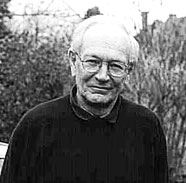
Charles Spencer King

Changes to the Range Rover for the 1991 season were held over until December 1990. In the meantime the 250,000th Range Rover rolled off the production lines in September 1990. But at that year's UK Motor Show, Land Rover provided a sneak preview of what was to come when they announced a limited-edition two-door Range Rover called the CSK.

The limited edition Range Rover CSK is named after Charles Spencer King, the man who designed the original 2-door Range Rover over 20 years ago. The CSK was intended primarily to publicise the new anti-roll suspension and was promoted as a sportier Range Rover. Most examples had the 3.9 litre V8 engine and five-speed manual gearbox. Most elements of the CSK's specification were drawn from the four-door Vogue SE or from US-market models. Each car has an individually numbered plaque on the radio panel confirming its exclusivity, discreetly bears his insignia, and in 1990 cost £28,995 (manual). For an automatic you had to pay £30,319.32.

The Range Rover CSK features a number of modifications improving both performance and passenger comfort. It's the fastest production Range Rover ever built at that time, with a re-chipped version of the 3.9 litre V8 engine developing 185bhp. The increase in performance is complemented by improved handling at high speeds. Land Rover UK had introduced front and rear anti-roll bars and sports dampers, giving a smoother, more comfortable ride for on-road handling. The roll stiffness is increased by 25 per cent over the standard production model.

The CSK is also the most aesthetically pleasing Range Rover ever built. Outside, the stunning Beluga Black paintwork is contrasted with chrome bumpers and silver pinstripe coach lines, whilst discrete silver CSK logos are positioned on both front wings and one on the lower tailgate. The elegant CSK lettering on the sides of the scuttle panel supposedly represents Spen King's signature, but his bank probably wouldn't honour any cheque with this scrawled across it. The great man confessed some years ago that he had to write his initials in three or four different ways before Land Rover stylists found a version they liked.

Inside, you'll find American walnut on the fascia-rail, centre console and door inserts. The interior is finished in beige, handcrafted, soft leather seats, co-ordinated leather door trims and a leather covered steering wheel, all exclusive to this limited edition.

The original owners of the CSK received a special sales brochure and an original Range Rover CSK Owners Pack in a cardboard box, containing the original black wooden box with an etched metal plate, the sales folder and a certificate of authenticity containing the original thank-you slip written and signed by Charles Spencer King himself. The Owners Packs are a collector's item nowadays.

Personal View & Ride Impressions

The CSK was not the first limited edition Land Rover had built — the Vogue models in the early eighties were also limited editions. But the CSK was the first model that carried a plate declaring the fact and indeed a paper certificate of authenticity. Surely, a limited edition gives the purchaser a feeling that a rare vehicle can be possessed as a sort of now-or-never opportunity.

When the Range Rover CSK was announced in 1990, there was a certain amount of sniggering in Land Rover enthusiast circles. Most people couldn't imagine why anybody would want a two-door Range Rover at all in a market where only four-doors were being sold. In fact, Land Rover chose to make the special edition a two-door mainly because every other UK Range Rover in the showroom at that time was a four-door. It made the model distinctive. And though some of them took a while to find buyers, all of the 200 CSK models eventually did.

Range Rover would, one presumes, never be so vulgar as to label one of its products as a GTI — but that is more or less what the limited edition CSK amounts to.

The CSK was a direct descendant of the Olympic project of the mid-1980s, which had been aimed at producing a sporty derivative of the Range Rover. The Olympic and the Kestrel prototypes which followed it had two-door bodyshells because Land Rover thought they looked more sporty than the four-door variety.

But not every CSK had two doors. In Australia, there was a special edition four-door model badged as a CSK. It was created by the importers and carried a simple CSK logo which was not intended even remotely to resemble Spen King's signature. There were 400 Australian-specification CSKs made at the same time — based on the standard four-door Vogue SE equipped with a coachline and a logo.

So Land Rover had launched the fastest-ever Range Rover with a suspension package that made it a much more convincing road vehicle, yet without losing any of its tremendous off-road ability. Even today, the CSK feels surprisingly modern. For a car of two tons, it can be hurried surprisingly quickly along the lanes, thanks to an enthusiastic V8 engine. The gorgeous V8 burble thumps out 185bhp at 4,750 rpm and 235lb ft of torque at just 2,600 rpm. The CSK will reach a claimed 114mph — making it the quickest standard Range Rover ever offered — with a 0-60 time of 9.9 seconds. Standard vehicles managed 110mph and took 11 seconds to 60. But it's difficult to make too many gains in this area, given that Range Rovers are about as aerodynamic as Finland.

The CSK at last delivers the sort of road handling performance that every Range Rover should have had for the past 20 years. On the road, the results are very impressive. The Range Rover has never been known for its communicative steering, but the CSK is crisper in its responses, far less vague around the straight ahead and feels more stable and precise at speed. There's much less initial roll and far better turn-in, and the CSK can be powered through a series of bends in a more fluid and far better controlled manner.

Before the Range Rover Sport was introduced in April/May 2005, the CSK had been the only other sporting Range Rover. And for this reason Land Rover borrowed CSK 001 at the Range Rover Sport's World Wide Launch in Spain — as a link between old and new and as a tribute to the original designer of the Range Rover, Charles Spencer King.

Buying & Running Tips

If you're looking for a special car, it will cost you a lot of time and money. This is especially true of the CSK special edition Range Rover, assuming, that is, you can find one for sale.

The asking price for runners in good condition is between £5,000 and £7,000. Projects are from around £1,000 upwards, depending on the amount of rot and the condition of the interior. Automatics are rarer than the manual ones. It is important that you pay attention to the unique bits, like the trim that is unavailable. Until recently the chrome bumpers were still for sale new. The rest of the CSK is really standard and won't be hard to find.

The quality control was not brilliant when they were built and now, some 36 years later, many are showing signs of corrosion in the inner wings, sills, rear cross members, tailgates, doors and even the windscreen pillars — the normal problems faced when buying a classic Range Rover. If you do find one, make sure that the price genuinely reflects the cost of putting it in order. Don't underestimate repair costs.

The mechanical bits are all available either new or secondhand, as is most of the bodywork being common to all similar-age Range Rovers, although good 2-doors are very hard to find. The special wheels are easy to find as they were used on the LSE, though they will need painting to suit the CSK.

The VIN Number — all CSKs were built to UK home market specifications and do not have any unique identifying feature in their VIN number. They all start:

SALLHABM7GA xxxxxx

This VIN translates as a Range Rover three-door Estate 3.9 pi RHD 5-speed manual 1990 model year assembled at Solihull. The automatic ones had a 3 instead of the 7 for the ninth digit. There are no identifying features in the registration details either, as they are just recorded as Range Rover Efi Estates. Being a popular style it is not unknown for replicas to have been created — so if it does not fit the pattern above, or if the individually numbered plaque is missing from the radio panel, be very cautious.

Land Rover at Lode Lane, Solihull, can verify the VIN number and do hold a record of the CSK built vehicles. Interestingly, the certificates were not assigned in production sequence — edition number 001 was actually the 6th car off the production line, and Spen King's own CSK was the 5th built but carries certificate number 200. So always verify against the plaque, not just the VIN sequence.

Present & Future

In the beginning only 200 CSKs were built, which makes them something of a rarity. Two CSKs ended up on the Land Rover test fleet and were run to destruction. What happened to the other 198?

Three cars went to Australia, as many as twelve went to New Zealand, four or five examples went to South Africa, one ended up in Kenya, one car has been spotted in Argentina and three cars are known to be in Holland. Several will have been broken up by garages or their owners after being considered beyond economical repair. Several more will probably be in storage awaiting the attentions of suitably skilled or wealthy owners. Of the rest, it is believed that 80 to 100 CSKs are still surviving or at least in working order.

If you've got one, don't spoil it and don't sell it. The CSK is bound to appreciate in value over time.

The CSKs have their own cult following now, and this website aims to keep that alive. It's a good classic Range Rover, but one of a very rare kind. Everyone likes the looks of the CSK. And the CSK Range Rover is a highly prized vehicle by the majority of their owners — their value warrants keeping the ones left in good condition for future generations, who will also be able to experience what is undoubtedly the best performing and probably the best looking Classic Range Rover ever produced.

Full Specification

Interior Trim

  • Soft Leather Upholstery
  • Perforated Leather Seat Facings
  • Soft Leather Covered Steering Wheel with Perforated Leather Grips
  • Soft Leather Door Trim
  • Asymmetric Split Hi-Back Rear Seat
  • Parcel Shelf & Carpeted Loadspace in Beige
  • American Walnut Fascia Rail, Centre Console and Door Inserts
  • Air Conditioning
  • Central Locking
  • Electrically Operated Tilt/Slide Sunroof
  • Electric Windows
  • Individually Numbered Plaque on Radio Panel

Exterior Features

  • Beluga Black Coachwork (clear over base)
  • CSK Logos on Front Wings and Lower Tailgate
  • Silver Pinstripe Coach Line
  • Side Rubbing Strips
  • Chrome Bumpers Front & Rear
  • Black Front Spoiler with Integral Fog Lamps
  • Headlamp Power Wash
  • Electrically Adjustable Heated Door Mirrors
  • Black-Edged Silver 5-Spoke Alloy Wheels (unique to this edition)
  • “T” Rated Michelin XM+S244 205 R16 Tyres
  • Bumper Mounted Auxiliary Driving Lamps (55 watt)

In-Car Entertainment

  • Security Coded Radio/Cassette
  • Six Speakers (including 2 bass speakers on doors)

Drivetrain & Transmission

  • 3.9 Litre V8 Petrol Injection Engine — ECU recalibrated for additional power
  • Permanent Four-Wheel Drive
  • 5-Speed Manual Transmission or 4-Speed Automatic Transmission
  • High/Low Ratio Transfer Box with Viscous-Coupling Central Diff Lock

Suspension

  • Boge Self-Levelling Unit
  • Sports Hydraulic Dampers
  • Anti-Roll Bars Front & Rear (25% increased roll stiffness over standard)
  • Long Travel Coil Springs
  • Soft torsion bushings on axle radius arms — off-road articulation maintained

Braking

  • ABS Braking System (WABCO) — world’s most advanced 4WD ABS at the time
  • Front Vented Disc Brakes
  • Rear Disc Brakes

Lighting

  • Quartz Halogen Headlamps (60W main, 55W dipped)
  • Bumper Mounted Auxiliary Driving Lamps (55W)
  • Front Fog Lamps (55W) — integral to front spoiler
  • Rear Fog Lamp (21W)

Engine — 3.9 Litre V8 Petrol Injected

Eight cylinders in vee formation, aluminium construction with five bearing crankshaft and self-adjusting hydraulic tappets.

Bore
94.0 mm (3.7 in.)
Stroke
71.1 mm (2.8 in.)
Cubic Capacity
3,947 cc (241 cu.in.)
Compression
9.35:1
Max Power
138.0 kW — 185.1 bhp at 4,750 rpm
Max Torque
318.0 Nm (235.1 lb.ft) at 2,600 rpm
Fuel Tank
16.8 gallons (76.3 litres)
Fuel Grade
95 RON Unleaded minimum

Performance

5-Speed Manual 4-Speed Automatic
0–60 mph9.9 seconds9.9 seconds
Maximum Speed114.0 mph113.5 mph
Urban Fuel Economy15.6 mpg (18.1 l/100km)14.4 mpg (19.6 l/100km)
56 mph Constant26.9 mpg (10.5 l/100km)26.9 mpg (10.5 l/100km)
75 mph Constant21.0 mpg (13.4 l/100km)21.1 mpg (13.4 l/100km)

Weights — EEC Kerb (kg)

Front AxleRear AxleTotal
5-Speed Manual1,023.5988.02,011.5
4-Speed Automatic1,050.5992.02,042.5
GVW1,200.01,510.02,510.0

Original Retail Price — 1990

£28,995
5-Speed Manual
£30,319
4-Speed Automatic

Acknowledgements

  • Charles Spencer King — creator of the original Range Rover
  • Land Rover — for making the Range Rover CSK and the sales brochure “Range Rover Special Edition 20 Years On”
  • Lynda Clark — British Motor Industry Heritage Trust
  • Emma-Claire Dunning — Land Rover Classic Parts
  • Peter Kenworthy — History/Archives Officer, Range Rover Register
  • The Range Rover Register — for publishing the Launch Press Release, Product in Detail and the article in Issue 35, February 1991 “A very special Range Rover”
  • James Taylor & Nick Dimbleby — Range Rover: The Complete Story
  • Simon Hodder — “Range Rover CSK, Licensed to Thrill”, LRE, September 2006
  • Patrick Sutcliffe — “I've sold my CSK”, LRE, April 2005
  • Andy Egerton — “Chip of the block”, LRM, April 2005
  • LRE — “Behind the wheel”, October 2002
  • Fast Lane — “Tried”, March 1991
  • Autocar & Motor — “Range Rover CSK”, December 1990
  • Howard Lees — “Impressions, Range Rover CSK/Discovery 5-door”, Performance Car, November 1990
  • Les Roberts — “Fit For A King” and “Buying & Running”, LRM, October 2006

Article contributed by Michiel Bakkenes, then owner of CSK No. 041, November/December 2006.

© 2006 Michiel Bakkenes for rangerovercsk.com — reproduced with permission.